
What are the “New Ivies”? 10 Schools Just as Competitive as Harvard and Yale
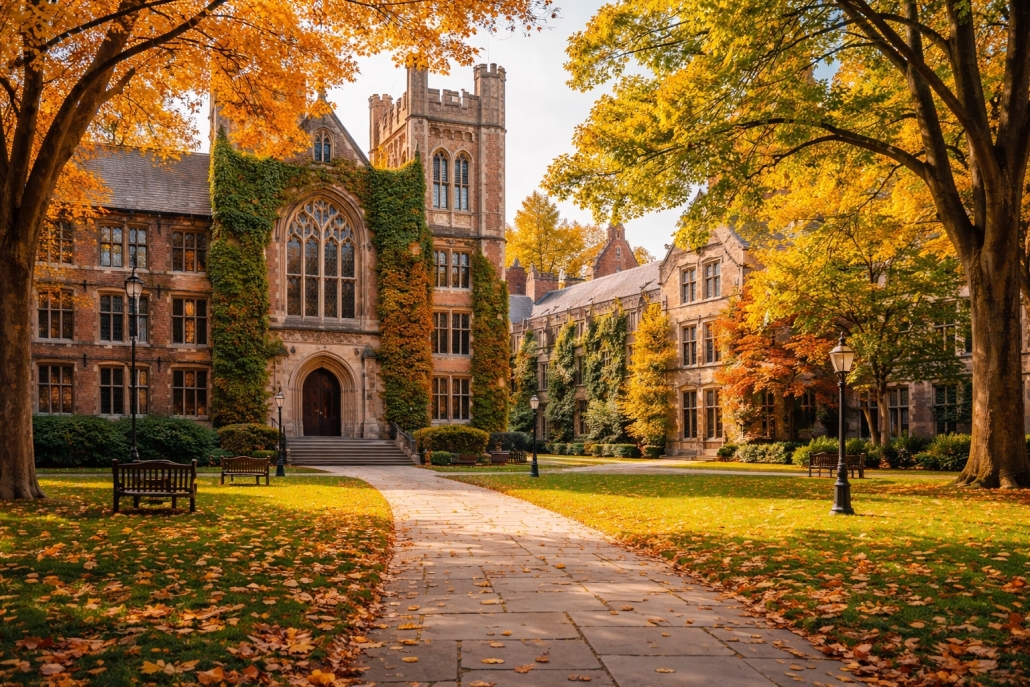
You’re at a dinner party, and someone drops the phrase “Ivy League” like it’s the secret password to life success. Suddenly, everyone’s nodding like bobbleheads while sipping their Pinot.
Your kid’s future shouldn’t hinge on a zip code in Cambridge or New Haven. The world is full of incredible schools that don’t rhyme with “Princeton,” and guess what? Many of them are just as competitive, just as intellectually electric, and—wait for it—often a better match for your child’s personality, passions, and sanity.
Does the Ivy League Name Actually Matter?
We get it—there’s something irresistible about a household-name school with ivy-covered walls and alumni who casually win Pulitzers. But here’s the truth: prestige doesn’t guarantee a positive student experience. In fact, chasing status can sometimes land your child in an environment that stifles their spark rather than fuels it.
Prestigious schools aren’t automatically the best fit. And if you’re evaluating campus culture seriously, you’ll realize that “name brand” matters less than whether your child feels supported, challenged, and genuinely excited to show up every morning (or log on to their 8 a.m. philosophy class).
Prestige vs. Personal Growth and Happiness
A school’s academic prestige may look dazzling in rankings and college lists, but it won’t matter much if your student feels isolated, overwhelmed, or out of sync with the culture. Some high-ranking schools are ultra-competitive pressure cookers. Others may have intense social scenes, outdated teaching methods, or a vibe that simply doesn’t match your child’s needs.
The goal isn’t just academic success—it’s personal growth and long-term happiness. Does the school encourage curiosity or reward conformity? Will your child be mentored, or just measured? Prestige can’t teach resilience, confidence, or self-discovery. The right campus culture can.
The “Hidden Ivies”: 10 Elite Schools with Ultra-Low Acceptance Rates
Before you tattoo “Ivy or bust” on the family crest, let’s talk about ten schools that bring the brains without the brag.
Please note that this ranking is based on Cardinal Education’s professional experience as educational consultants and feedback from hundreds of families we have worked with. It reflects our informed opinion and is intended to provide insight for families exploring private school options.
As such, this content is not affiliated with, endorsed by, or officially representative of any of the schools mentioned.
1. Massachusetts Institute of Technology (MIT)
MIT is a powerhouse of innovation and consistently ranks as the top non-Ivy League school in the country. Known for its cutting-edge research and groundbreaking work in science, technology, engineering, and mathematics, MIT sets the global standard for STEM education.
The school boasts an acceptance rate of about 4%, putting it on par with the most selective institutions in the world. Students here thrive in an environment that values creativity and collaboration as much as technical brilliance. Beyond the labs and lecture halls, MIT fosters entrepreneurship and encourages students to solve real-world problems, making it a launchpad for future leaders in tech, research, and beyond.
2. Stanford University
Stanford is often mentioned in the same breath as the Ivy League, and for good reason. With an acceptance rate hovering around 4%, this Silicon Valley neighbor offers students unparalleled access to innovation, research, and global industry leaders.
Approximately 70% of Stanford classes have fewer than 20 students, creating an intimate learning environment where faculty mentorship is a given. Known for blending academic rigor with entrepreneurial spirit, Stanford attracts some of the brightest minds who dream big, whether that’s founding the next tech giant or leading groundbreaking research in sustainability, medicine, or social impact.
3. California Institute of Technology (Caltech)
Caltech may be small, but its reputation looms large. With an acceptance rate of just 3–4%, it’s one of the most selective colleges in the United States. Known for its strength in pure and applied sciences, Caltech ranks as the #2 hardest school to get into, according to Niche
Its intimate campus fosters close-knit collaboration, with students and faculty often working side by side on high-level research. If you’re passionate about engineering, physics, or pushing the boundaries of science, Caltech provides a world-class education and the opportunity to contribute to transformative discoveries.
4. University of Chicago
Renowned for its intellectual rigor and iconic Core Curriculum, the University of Chicago is a haven for deep thinkers and bold innovators. With an acceptance rate between 6.5% and 7%, it consistently attracts students who thrive on academic challenge.
UChicago is famous for having some of the highest SAT ranges in the nation and an emphasis on critical inquiry that extends beyond the classroom. Whether it’s economics, political science, or molecular engineering, UChicago students are taught to question, debate, and redefine the status quo—skills that serve them well in any career.
5. Johns Hopkins University
Johns Hopkins is a global leader in research and education, particularly in medicine, public health, and engineering. With an acceptance rate around 5–8%, it remains one of the most competitive schools in the country.
Hopkins students have access to cutting-edge labs, world-class faculty, and research opportunities that start as early as freshman year. Its emphasis on experiential learning, combined with a reputation for producing leaders in science, healthcare, and international affairs, makes JHU a top choice for students who want to change the world through discovery and service.
6. Duke University
Duke combines Southern charm with Ivy-level prestige, making it one of the most desirable non-Ivy League schools. With an acceptance rate between 5% and 9%, Duke attracts students who are equally passionate about academics, leadership, and service.
Located in North Carolina’s Research Triangle, Duke offers unparalleled opportunities for research and collaboration across disciplines, including engineering, the arts, and the sciences. The school’s commitment to community, combined with its athletic spirit and global programs, creates a dynamic environment where students are encouraged to excel both inside and outside the classroom.
7. Northwestern University
Northwestern is a research powerhouse and one of the most versatile universities in the U.S. With an acceptance rate of around 7%, it offers world-class programs across disciplines, including its top-ranked Medill School of Journalism and strong engineering and business schools.
Northwestern encourages academic exploration, with about 80% of students pursuing double majors or combining majors with minors. Known as one of the “Hidden Ivies,” Northwestern pairs academic excellence with a vibrant campus life just outside Chicago, giving students access to both big-city opportunities and a supportive community.
8. University of California, Berkeley
UC Berkeley is the crown jewel of the University of California system and one of the original “Public Ivies.” With an acceptance rate of around 7%, it’s one of the most competitive public universities in the world.
Berkeley consistently ranks among the top institutions for STEM, social sciences, and public policy, and it has a legacy of fostering innovation and activism. Students here join a community driven by intellectual curiosity and social impact, making Berkeley an ideal choice for those who want both academic prestige and a chance to make a difference.
9. University of California, Los Angeles (UCLA)
UCLA isn’t just a top public university—it’s a cultural icon. With an acceptance rate between 6% and 9%, it stands shoulder to shoulder with elite private schools in terms of selectivity and academic quality.
UCLA offers an extraordinary range of programs, from the arts to engineering, and frequently outperforms the Ivies in student satisfaction rankings. Its location in Los Angeles gives students unique access to internships in entertainment, tech, and global business, making it a launchpad for ambitious students across disciplines.
10. University of Michigan, Ann Arbor
The University of Michigan is one of the original “Public Ivies” and a global research leader. With an acceptance rate of 5–12%, Michigan offers highly competitive programs in engineering, business, and the liberal arts.
Known for its massive research output and collaborative academic culture, Michigan also boasts a spirited campus life and one of the most influential alumni networks in the world. For students seeking a combination of prestige, affordability, and world-class resources, Michigan is a standout choice.
Why These Made the List
So, what makes these schools just as competitive as the Ivies? It’s not just about name recognition—it’s about the combination of selectivity, academic excellence, and real-world outcomes. From jaw-dropping acceptance rates to global rankings and vibrant campus cultures, these institutions check all the boxes that matter for your child’s success. Here’s a quick breakdown of the key factors and why they matter:
| Factors | Why It Matters |
|---|---|
Ultra‑selective admissions |
Acceptance rates rival or beat Ivy League standards (3–9%). |
National/global rankings |
These schools consistently rank top 10–30 in U.S. News, QS, Forbes, WSJ. |
Research & career outcomes |
Employers seek grads; non‑Ivies like Michigan, Georgia Tech, and UNC are rising in preference. |
Academic depth & variety |
Strong across STEM, humanities, pre‑med, business, arts, journalism, engineering, and social impact. |
Cultural fit & student experience |
Many offer small classes, supportive communities, interdisciplinary study, and holistic development—beyond raw prestige. |
Why the Right Environment Can Outperform Rankings
Students often flourish more at schools that truly understand them, even if those schools aren’t in the U.S. News top 10. A school that aligns with your child’s learning style, values, and social needs will offer more meaningful outcomes than one that simply looks good on paper.
In fact, many families report that their children are more motivated, more involved, and more successful when they attend a “lower-ranked” school that’s a better cultural match. College admissions officers and future employers care about growth, passion, and authentic achievement, not just where the diploma came from.
Interested in one of these top schools? Apply with Cardinal Education’s Expert Help!
Prestige may turn heads, but the right school turns potential into reality. These non-Ivy powerhouses prove that success isn’t confined to eight campuses with ivy on the walls. The key is finding a school where your child thrives academically and personally.
Ready to explore the best options for your student? Let us guide you through the process. Contact us today and start building a future that fits.
Related Articles
Evaluating Campus Culture and Fit: How to Choose the Right School Environment
How to Choose Between Multiple College or Private School Admissions Offers
Frequently Asked Questions
Are these schools really as hard to get into as the Ivy League?
Absolutely. Schools like MIT, Stanford, and Caltech make the Ivy League look like a bake sale in terms of selectivity. We’re talking acceptance rates in the 3–4% range. For perspective, Harvard hovers around 3.5%. See the problem? If you thought “Ivy League” automatically equals hardest to get into, think again.
The reason these schools are so selective isn’t just prestige—it’s demand and resources. MIT and Stanford, for example, aren’t just universities; they’re ecosystems of innovation. Employers practically line up for their graduates. Add in world-class faculty, research funding that could rival small countries’ GDP, and a culture of high achievers, and you’ve got a recipe for serious competition.
So yes, if you’re thinking these schools are “easier” options than the Ivies, kindly drop that thought in the nearest recycling bin. These institutions are playing in the same league—and in some cases, the All-Star Game.
Why should I consider these schools if they’re as competitive as Ivies?
These schools offer many of the same benefits as Ivy League institutions—think top-tier academics, incredible networking, and career-launching opportunities—without some of the limitations of Ivy League culture. For example, Stanford puts you in the epicenter of Silicon Valley innovation. MIT basically hands you the keys to every engineering dream you’ve ever had. UCLA? It’s a global cultural hub with a side of sunshine.
What makes these schools exciting is their diversity of strengths and settings. Not every student thrives in a 300-year-old campus steeped in tradition. Some need a more entrepreneurial environment, a bigger public platform, or a specialized academic focus (hello, Caltech). These schools bring that flexibility while maintaining prestige and academic rigor.
You can still brag at the dinner table, without subjecting your kid to an environment that might not fit their personality or goals. It’s not “settling.” It’s being smart.
Do employers and grad schools view these schools the same way they view Ivy League degrees?
Spoiler alert: Employers don’t care about your diploma font as much as you think. They care about results, and these schools deliver. Graduates from MIT, Stanford, Berkeley, or Johns Hopkins often dominate fields like tech, medicine, finance, and research. Many of these universities rank above Ivies in global employer reputation surveys. That’s not me talking; that’s data.
Take Stanford grads, for example: they practically run Silicon Valley. Johns Hopkins? Name a major medical or research breakthrough in the past 50 years, and odds are, they had a hand in it. UCLA and UC Berkeley are closely tied to powerhouse industries in technology, entertainment, and public policy.
So, if you’re worried that choosing a “non-Ivy” will limit opportunities, rest easy. These schools aren’t just on par with Ivies—they’re often the first choice for recruiters who know where innovation really happens.
Bottom line: Prestige helps, but performance speaks louder. These schools have both.
What if my child doesn’t get into any of these competitive schools?
First, deep breath. Exhale. Repeat after me: Rejection isn’t a life sentence—it’s a redirection. The truth is, these schools (and the Ivies) reject thousands of brilliant students every year. That’s not because those kids weren’t capable; it’s because the math doesn’t work. When you’re competing for one of 2,000 seats with 50,000 applicants, even perfection on paper isn’t a guarantee.
Here’s the good news: success isn’t tied to a single name brand. Plenty of schools outside this list—and outside the Ivy League—offer incredible academics, supportive communities, and life-changing opportunities. The secret is fit. A well-matched school can ignite your child’s curiosity and confidence in ways a “prestigious” name never could.
Don’t wait until after the rejections to think about alternatives. Work with an expert (like us!) who understands the landscape and can help build a smart, balanced school list. Your kid’s future is bigger than any single acceptance letter.