
Your comprehensive guide to planning, organizing, and submitting your college applications successfully.
Quick Answers For Busy Parents
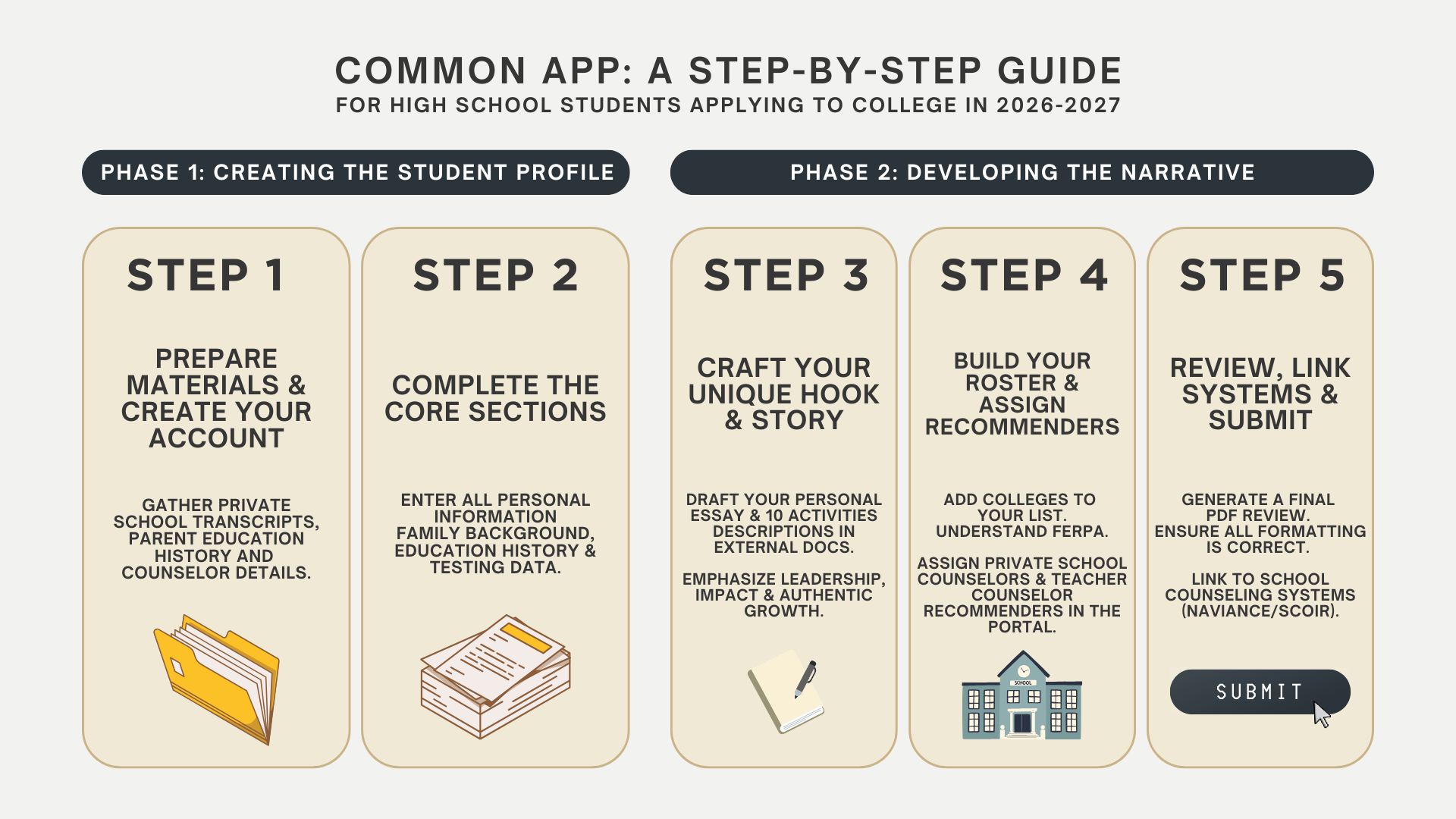
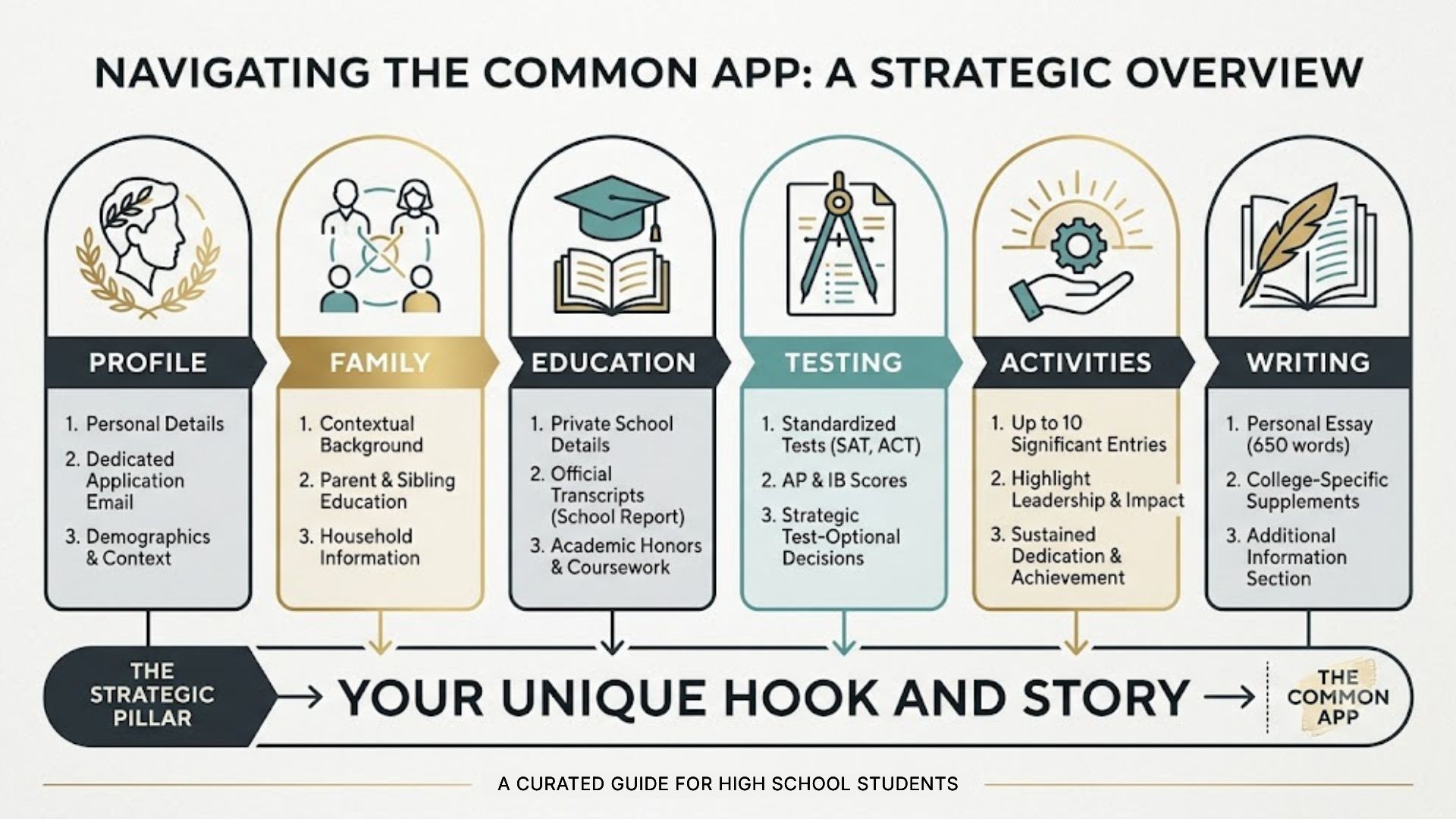
Setting up the Common App starts with preparing the application materials and creating your account. Next, the student needs to complete the Core Sections. Afterward, crafting your unique hook and story is the next step. Once you’ve submitted those requirements, your next move is to build your roster and assign recommenders. Lastly, reviewing, linking the systems, and submitting your application would close out the process.
Expert Insight: The Strategic Foundation
The Common App is not merely a data-entry portal; it is your first opportunity to establish a brand. By organizing your materials early, you ensure that the technical aspects of the application do not distract from the creative energy required for your essays. A cohesive setup allows for a seamless transition from logistics to high-level storytelling.
How Do I Set Up The Common App Step-By-Step For The 2026-2027 College Admissions Cycle?
Common App is a centralized online platform where high school students can streamline their applications to over 1,000 participating colleges. Given the sheer volume of schools you may apply to, and the platform’s highly detailed submission process, we’re here to show you exactly how to navigate it step-by-step.
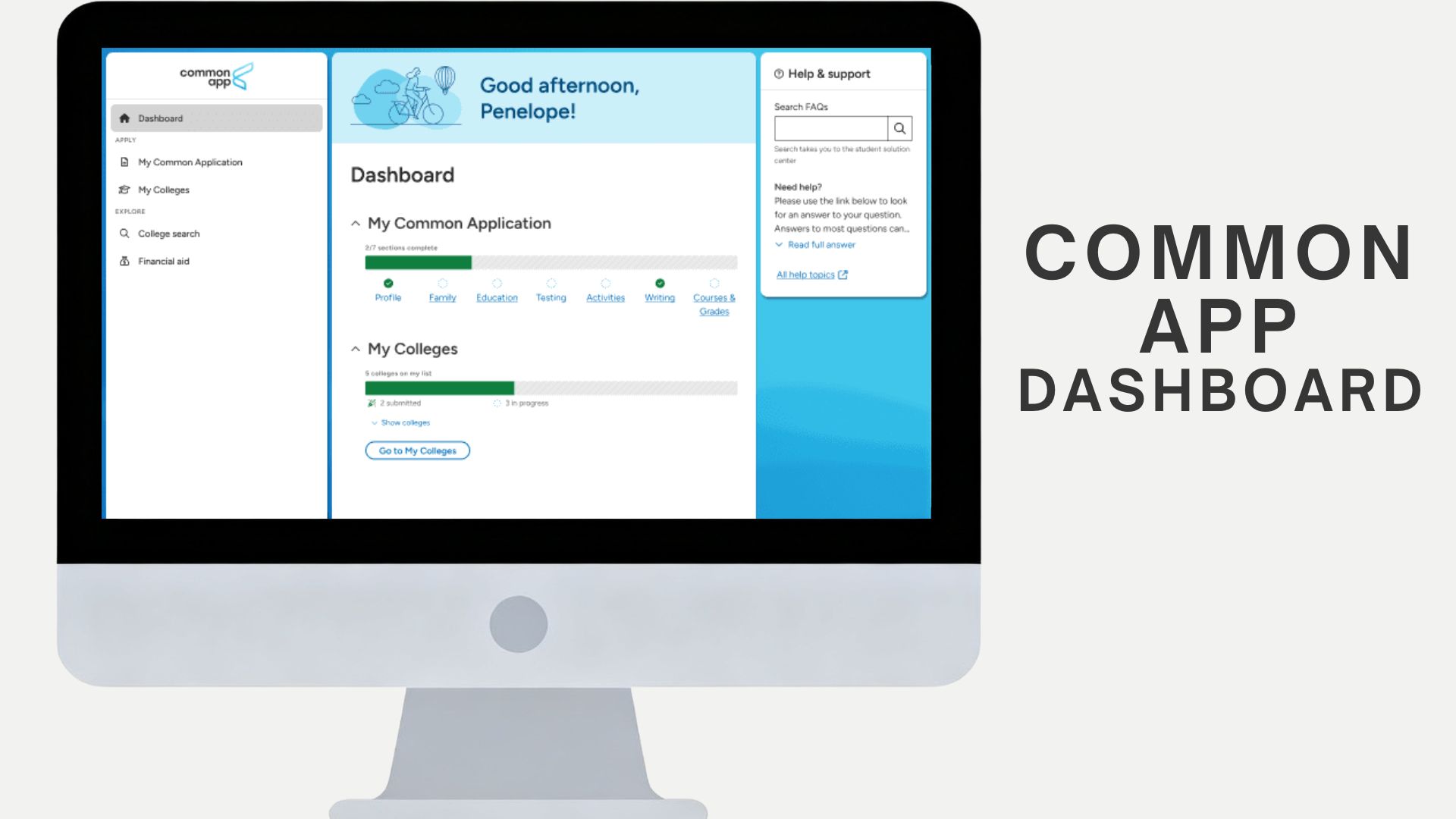
What Is the Exact Process to Create a Common App Account for High School Students?
1. Prepare Materials And Create Your Account
- This is often done the summer before Senior Year
- Gather your application materials
- Gather private school transcripts
- Parent education history and counselor details
- Go to CommonApp and create an account as a “First-Year Student”
- Choose the colleges you’re applying to
- Understand the dashboard
- Understand the “Account Rollover” feature
- Navigate the timelines and profile
- The app refreshes and opens on August 1st
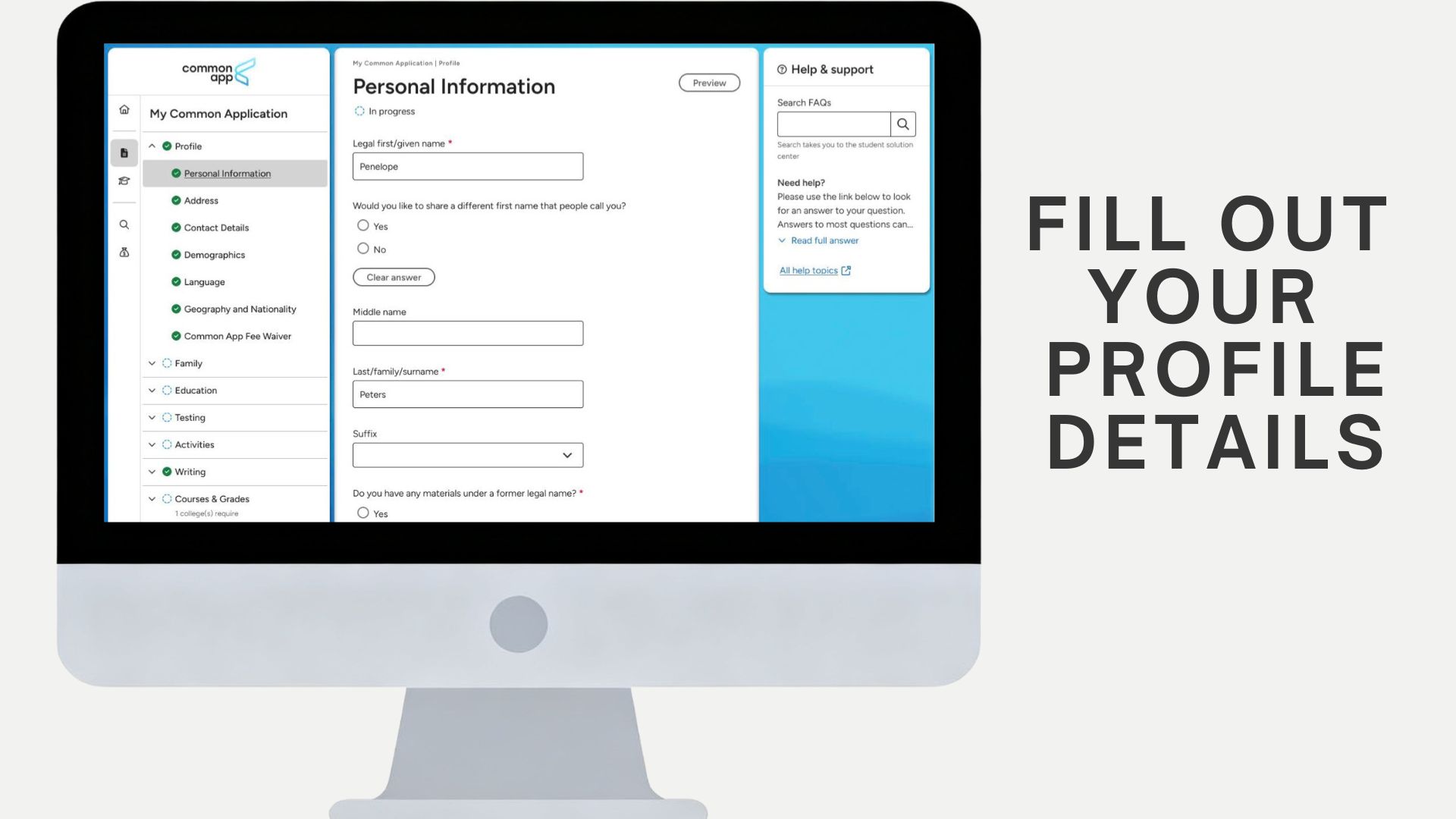
- Prioritize filling out the “Profile” section (name, address, demographics)
- Verify that all personal and high school counselor information is 100% accurate
2. Complete The Core Sections
- Fill out and complete the Family & Education history sections
- Family background, education history, and testing data
- Watch out for: GPA format, course listing
Expert Insight: Core Consistency
Admissions officers look for continuity across your profile. Any discrepancy between your self-reported data and official transcripts can trigger a red flag regarding your attention to detail or integrity. Completing these sections with precision builds the institutional trust necessary for them to take your personal narrative seriously.
3. Craft Your Unique Hook & Story
- Draft your personal essays and 10 activity descriptions in the external docs
- List and organize your Activities section (up to 10 activities)
- Frame them in 150 characters
- Ranked in order of importance
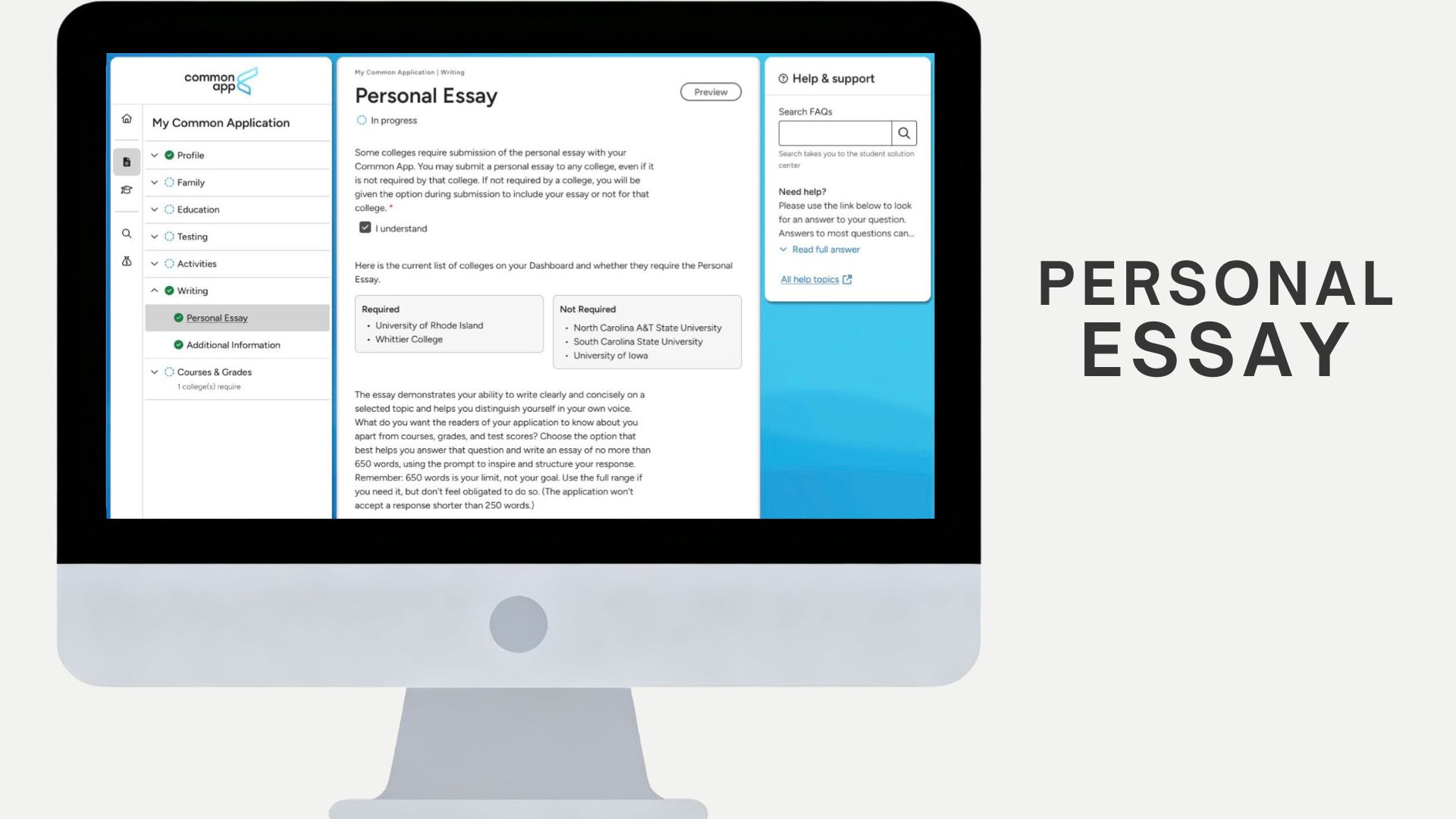
- Draft, format, and paste in your main Common App Essay
- Personal Statement
- Read and understand the seven prompts
- Choose which makes a strong Common App essay (650 words max)
- Emphasize leadership, impact & authentic growth
- Tackle school-specific supplements
- List what these supplements are
- Why do they vary by school
- How to manage them across multiple schools
4. Build Your Roster & Assign Recommenders
- Understand FERPA
- It’s a federal law that protects the privacy of student education
- Assign private school counselors and counselor and teacher recommenders in the portal
- Be mindful of timeline etiquette
5. Review, Link Systems, Finalize & Submit
- Generate a final PDF preview
- Ensure all formatting is correct
- Link to school counseling systems (Naviance/Scoir)
- Know about the submission checklist
- Understand the fee waivers
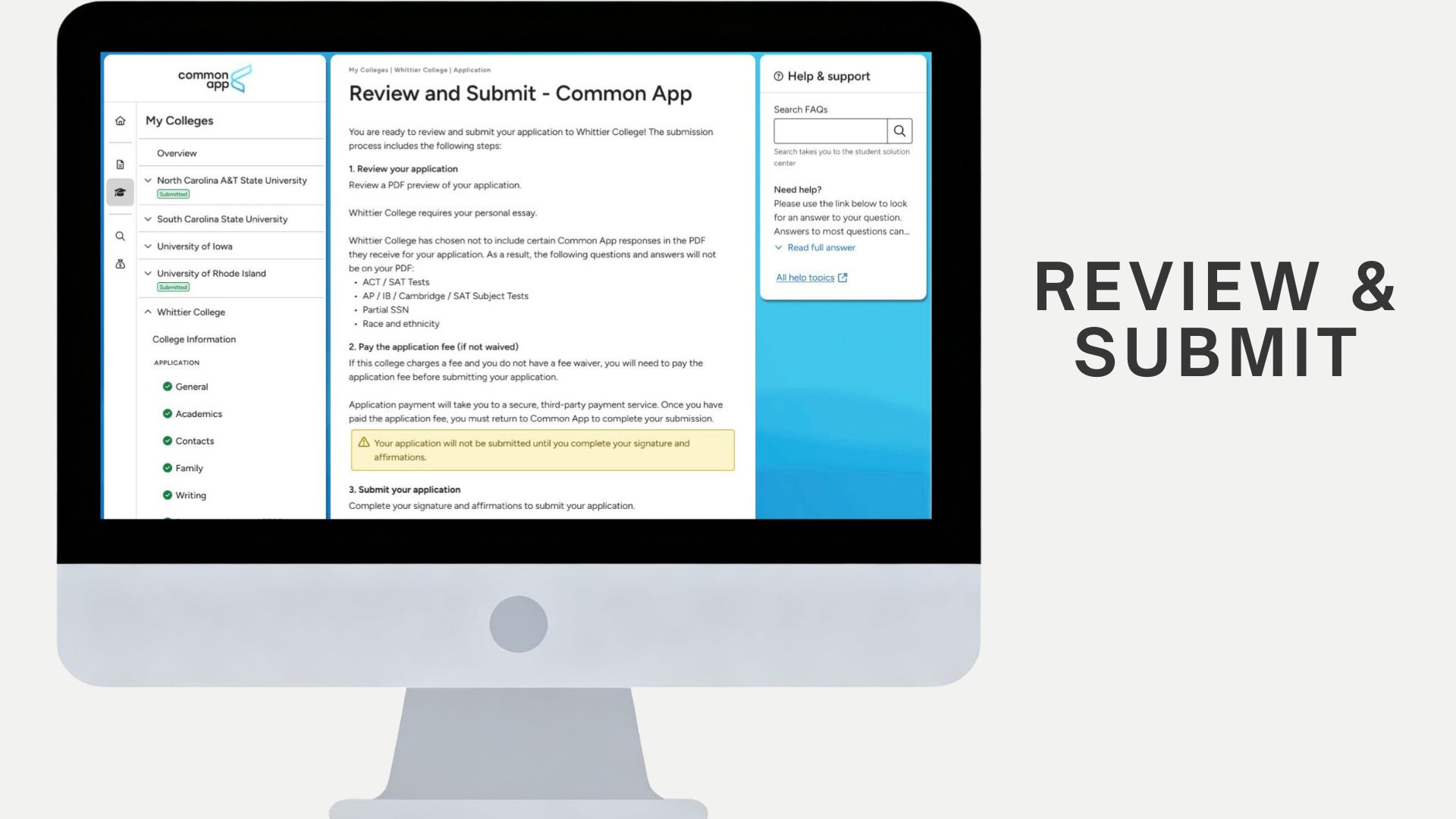
Top Tips for Starting Your College Applications On The Common App
- Create your account early. Open your Common App account before senior year to familiarize yourself with the platform.
- Get materials prior to making the account. Prepare your documents beforehand.
- Tackle the core sections first. This is central information and automatically distributed to every college on your list.
- Draft essays externally. Write, edit, and proofread your personal statement in a separate document before submitting it to the Common App.
Best Practices For Filling Out The Core Sections Of The Common App
- Double-check and match your official records.
- Maximize the 150-character limit in the Activities section by leading with strong action verbs.
- Report scores strategically by accurately self-reporting your highest standardized test scores.
- Utilize the preview feature to catch any odd formatting errors before officially submitting.
Common Questions About Writing The Common App Essay For High School Students
Q: Do all colleges require the Common App personal essay?
A: While not every college strictly requires the main personal essay, completing it is highly recommended to build a competitive and complete application.
Q: Can I submit a different main essay to different colleges?
A: No, your main Common App essay is sent exactly as written to all selected schools, but you can individualize your application through college-specific supplemental essays.
Q: What is the “Account Rollover” feature, and when should I use it?
A: The Account Rollover feature allows you to carry over your profile data from one year to the next. You should use this feature after August 1st if you started your account prior to your senior year.
Q: Can colleges see the other schools on my “My Colleges” list?
A: No, colleges cannot see the other schools on your list; they only receive the application materials you specifically submit to their institution.
Related Articles
How to Choose An Interesting Topic For Your Personal Statement
What Colleges Really Look for in Holistic Admissions: The Truth Behind the Process
Building the Perfect College List: 5 Myths Juniors Need to Ignore This Month
What’s The Strategic Approach For High School Students When Navigating The Common App?
The optimal strategic approach is to align student-controlled elements, like brainstorming the personal statement and finalizing the activities section, alongside administrative timeline requirements. High school students should prioritize securing third-party materials early, such as requesting letters of recommendation and official transcripts, to ensure local school deadlines are met. Mapping these tasks across an organized multi-week roadmap prevents last-minute submission panic and ensures every application is tailored to the specific culture of each prospective university.
Is There An Ideal Timeline For Writing Essay Requirements For College Applications?
To submit your application without the November 1st stress, you want your creative milestones to naturally sync with your administrative requirements. This eight-week ideal roadmap builds in ample buffer time for edits and school counselor processing.
Week 1-2: The Discovery Phase
Brainstorm your main Common App statement. Focus on “self-reflection” (identifying core values and stories) before writing a single full sentence.
Weeks 3-4: The Muddy First Draft
Choose a prompt and write a messy, zero-judgment rough draft. Focus on getting the narrative down without worrying about the 650-word cap.
Weeks 5-6: Deep Revisions & Supplements
Step away from writing for 48 hours, then revise for structural clarity. Cut the fluff to hit your word limit. Once the main essay is solid, start drafting the shorter, university-specific supplemental essays.
Weeks 7-8: Polish & Strategic Submission
Read your essays out loud to catch awkward phrasing. Have one trusted editor (such as an English teacher or counselor) provide a final proofread.
How Do I Plan Out My College Application Process By Season?
The Common App has made a Common App Planning Guide as a timeline for high school students to use. They have recommended this planning guide for a more organized application process
| Timeline | Fall/Winter |
| Fall |
|
| Fall/Winter |
|
| Spring |
|
| Fall / Winter / Spring |
|
| Summer |
|
Some Key Things To Remember:
- The Common App always opens on the 1st of August.
- The first major surge of deadlines for Early Action (EA) or Early Decision (ED) generally happens in November.
- The standard Regular Decision window often falls between January and February.
| Feature | Early Decision (ED) | Early Action (EA) | Regular Decision (RD) |
| Binding | Yes (Mandatory enrollment) | No | No |
| Timing | Nov 1 / Nov 15 | Nov 1 / Nov 15 | Jan 1 /In-depth |
| Pros | Higher acceptance rates | Early results, non-binding | More time for testing/essays |
| Cons | Cannot compare financial aid | Earlier deadline stress | Lowest acceptance rates |
Top Tips For Requesting Recommendations From Your Counselor and Teachers
- Ask in person first.
- Give plenty of notice.
- Choose the right teachers.
- Follow up with gratitude.
Best Practices in Finalizing The Review And Submit Section On The Common App
- Look for green checkmarks.
- Double-check the PDF review.
- Sign with your exact legal name.
- Submit to schools individually.
Common Questions About Optimizing The Common App Timeline For High School Students
Q: What is the difference between Early Action and Regular Decision deadlines?
A: Early Action lets you apply by November to get an earlier admission decision, while Regular Decision usually pushes deadlines to January or February.
Q: How early should I ask my teachers for letters of recommendation?
A: Always request your recommendation letters before the end of your junior year to guarantee your teachers have enough time to write them.
Q: Can I submit my Common App before my recommenders submit their letters?
A: Yes, you can officially submit your application to a college even if your teachers and counselors are still finalizing their recommendation uploads.
Q: Does submitting my application earlier give me a better chance of admission?
A: Unless the school uses a “rolling admissions” process, submitting your application months early does not typically give you an admissions advantage over applying on the deadline day.
Related Articles
How Important Are Recommendation Letters For College in College Admissions?
Your School College Counselor vs Independent College Admissions Consultant: Who’s Better?
Academic Coaching: How To Know Your Child Needs A Mentor, Not A Tutor
The Common App may seem complex, but with the right guidance, you can complete every section with a strategic approach.
To plan, organize, and submit applications to schools effectively and efficiently, you need an expert in your corner. At Cardinal Education, we provide you with in-depth support to craft a highly competitive and bespoke application.
Schedule a confidential consultation with us today.