
Cardinal Education is an independent educational consulting company. We are not affiliated, associated, authorized, endorsed by, or in any way officially connected with any public or private school.
Quick Answer for Busy Parents
- • Admissions to The Harker School are highly competitive, with acceptance rates often below 20%
- • Key entry points include grades K, 3, 4, 6, and 9
- • The process is holistic, evaluating academics, character, and extracurricular involvement
- • ISEE or SSAT testing is required for most grades
- • Interviews, recommendations, and overall presentation play a major role
Is Harker a Good School?
The Harker School is a coeducational, non-profit private school in Silicon Valley, which is known for its outstanding student achievements, motivating and committed faculty, and academic brilliance. It is ranked among the USA’s premier college preparatory schools and offers a well-rounded education to students from kindergarten to the twelfth grade. Established in 1893, Harker now stands as the largest independent school of its kind in California and now has 1,975 students enrolled. Harker’s campuses in San Jose provide an advanced set of facilities, cutting-edge technology, and a motivating faculty that is committed to meeting the unique needs of lower, middle, and upper school students so they can realize their full potential. 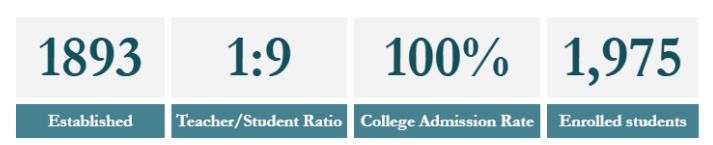
How Competitive Is Harker School Admissions?
The Harker School is widely considered one of the most selective private schools in California. While exact acceptance rates vary by grade level, they are typically below 20%, with even lower rates at major entry points. What makes the process particularly competitive is the strength of the applicant pool. Many students applying to Harker:
- • Earn consistently high grades
- • Participate in advanced coursework
- • Are involved in multiple extracurricular activities
As a result, admissions decisions often depend on qualitative factors such as:
- • Depth of intellectual curiosity
- • Strength of recommendations
- • Interview performance
- • Personal character and contribution to the community
Given the competitiveness of the process, families may benefit from working with private school admissions consultants who understand the ins and outs of the Harker School admissions process. Consultants can provide valuable guidance in presenting a compelling application and ensuring prospective students stand out in a highly selective pool of candidates.
Understanding The Harker School Admissions Process
Gaining admission to The Harker School is a highly selective process. Each year, the school receives a large number of applications from students with strong academic records and meaningful extracurricular involvement. Admissions decisions are not based on a single factor. Instead, the school evaluates each applicant holistically, taking into account:
- • Academic performance
- • Standardized testing
- • Teacher recommendations
- • Personal character and values
- • Extracurricular engagement
- • Interview performance
Because many applicants meet the academic expectations, the process often comes down to how clearly a student presents themselves across all parts of the application.
The Harker School Application Process
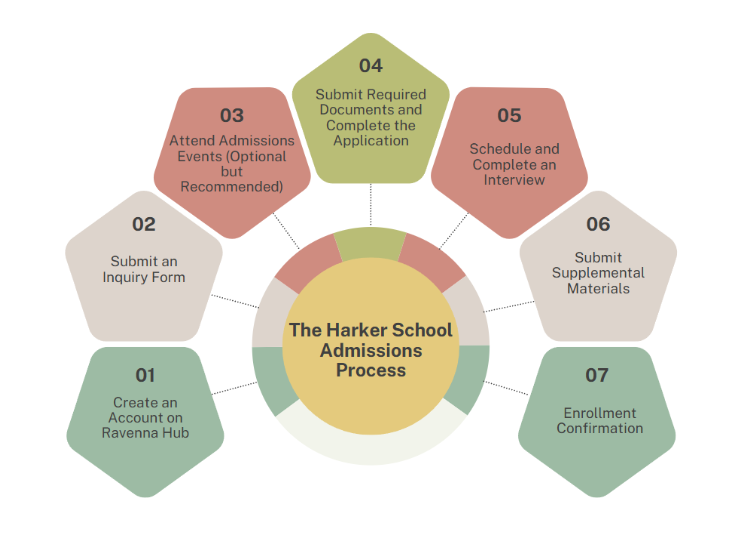
Creating an account on Ravenna is the first step in the Harker application process. You may apply, register for Harker admission events, receive notifications from Harker, and monitor your application progress all through your Ravenna account. The admission steps you should take are as follows:
- Create an Account on Ravenna Hub
- Submit an Inquiry Form
- Attend Admissions Events (Optional but Recommended)
- Submit Required Documents and Complete the Application
- Schedule and Complete an Interview
- Submit Supplemental Materials
- Enrollment Confirmation
How Competitive Is Harker School Admissions?
The Harker School is widely considered one of the most selective private schools in California. While exact acceptance rates vary by grade level, they are typically below 20%, with even lower rates at major entry points. What makes the process particularly competitive is the strength of the applicant pool. Many students applying to Harker:
- • Earn consistently high grades
- • Participate in advanced coursework
- • Are involved in multiple extracurricular activities
As a result, admissions decisions often depend on qualitative factors such as:
- • Depth of intellectual curiosity
- • Strength of recommendations
- • Interview performance
- • Personal character and contribution to the community
What The Harker School Looks For in Applicants
The Harker School is not simply looking for high-performing students. The admissions committee is focused on identifying students who will contribute meaningfully to the school’s academic and social environment. Key qualities include:
Intellectual Curiosity
Students who go beyond assigned work and show genuine interest in learning tend to stand out.
Character and Integrity
Respect, responsibility, and honesty are important traits in successful applicants.
Engagement and Initiative
Rather than participating in many activities at a surface level, strong applicants show commitment and growth in a few areas.
Community Contribution
Harker values students who will actively participate in and contribute to the school community.
Self-Awareness
Students who understand their strengths, challenges, and motivations often present stronger applications.
The Harker School Admission Requirements
GPA, Academic Performance, and Expectations
Strong academic performance is expected of all applicants. Most successful candidates:
- • Maintain consistently high grades
- • Take appropriately challenging coursework
- • Demonstrate strong writing and analytical skills
However, academics alone are rarely enough to secure admission. Many applicants meet these benchmarks, which is why the qualitative aspects of the application carry significant weight.
Standardized Testing Requirements
The Harker School typically requires standardized testing for most grade levels.
- • ISEE or SSAT scores are commonly required
- • Strong scores can support an application, but are not the only factor
- • Test performance is evaluated alongside academic records and other materials
Families should view testing as one component of a broader application strategy.
Timed Writing Sample
The Writing Sample is an online test in which upper-school students are expected to write an essay in response to a prompt within 30 minutes. Due to the limited time, applicants often have difficulty composing their thoughts and are not able to produce well-written essays.
Writing Sample Tips
To help your child with this challenging admissions requirement, we offer Proctored Writing Sample (PWS) preparation. Our admissions consultants have a list of common essay prompts that your child can practice on and get trained to organize their ideas and put them into writing. To take your child’s writing skills to the next level, enroll in our Program in Writing and Reading (PWR), where our writing tutors will help your child develop reading comprehension skills and eventually unlock writing skills.
The Harker School Interview: What to Expect
The interview is one of the most important parts of the admissions process. It gives the school insight into how a student thinks, communicates, and engages with others. Common interview topics include:
- • Academic interests
- • Extracurricular involvement
- • Personal values
- • Experiences with challenges and growth
Strong interviews feel natural and reflective rather than overly rehearsed. Students who engage thoughtfully and communicate clearly tend to leave a stronger impression.
Teacher Recommendations That Stand Out
Teacher recommendations are a critical component of the application. Strong recommendations typically highlight:
- • Intellectual engagement in the classroom
- • Work ethic and responsibility
- • Collaboration with peers
- • Growth over time
Detailed and specific recommendations carry more weight than generic praise.
The Harker School Admissions Timeline
Understanding the timeline helps families stay organized and avoid last-minute stress.
Fall (September–October)
- • Research schools and begin preparing application materials
- • Request teacher recommendations
Late Fall to Early Winter (November–January)
- • Submit applications
- • Complete interviews
- • Finalize all required materials
Spring (March)
- • Admissions decisions are released
Starting early allows students to present a more thoughtful and cohesive application.
Real Applicant Positioning: What Actually Makes a Difference
In a competitive pool, many applicants appear similar on paper. The difference often comes down to how clearly a student’s story is communicated. Stronger applicants tend to:
- • Show a consistent pattern of interests and growth
- • Demonstrate initiative beyond requirements
- • Communicate thoughtfully during interviews
- • Present a cohesive narrative across all application components
The goal is not perfection, but clarity and authenticity.
How to Build a Strong Harker Application
A successful application is cohesive. Each component should reinforce the same overall narrative. This includes:
- • Academic choices that reflect curiosity and effort
- • Activities that show commitment and development
- • Recommendations that support the student’s character
- • An interview that brings the student’s personality to life
When these elements align, the application feels complete and compelling.
Work With Cardinal Education
At Cardinal Education, the focus goes beyond assembling applications. The goal is to help students develop the awareness, confidence, and direction needed to present themselves thoughtfully. This includes:
- • Clarifying a student’s strengths and interests
- • Guiding long-term academic and personal development
- • Preparing for interviews through real conversation practice
- • Helping students communicate their story clearly and naturally
The result is not just a stronger application, but a student who is better prepared for the environment they are applying to.
Common Mistakes Families Make
Even strong applicants can weaken their chances with avoidable mistakes:
- • Focusing only on grades and test scores
- • Participating in too many activities without depth
- • Submitting generic or unfocused applications
- • Underpreparing for interviews
- • Starting the process too late
Avoiding these pitfalls can significantly improve how an application is evaluated.
Common Questions About The Harker School Admissions
Q: How hard is it to get into The Harker School?
A: Admission is highly competitive, with acceptance rates often below 20% depending on the grade level.
Q: What tests does Harker require?
A: ISEE or SSAT scores are typically required for most applicants.
Q: What grades can students apply for?
A: Main entry points include grades K, 3, 4, 6, and 9.
Q: What matters most in the application?
A: A combination of academics, character, recommendations, and interview performance.
Related Articles
Demystifying the Harker School Application Timeline
Insights Into Harker School’s Selective Admissions Process
How Competitive is Harker School Compared to Other Private Schools?
Exploring the Top Clubs and Student Organizations at Harker School
How Harker School Builds Character Through Athletics and Leadership Development
What’s the Student Life Like at Harker?
The Harker School offers a dynamic and supportive student life, allowing students to explore their interests and passions across all grade levels. Students are encouraged to engage in activities that complement their academic pursuits. The school offers numerous clubs, organizations, and extracurricular programs catering to various interests. For instance, the upper school hosts clubs such as the Student Diversity Coalition, which fosters diversity and inclusion within the school, and the Student LIFE Board, which promotes student wellness. The middle school features an advisory and house system where each sixth-grade student is assigned to a small advisory group and one of four houses. This structure promotes camaraderie and school spirit through regular meetings and events.
Harker School Curriculum Overview
Across all school levels, students can explore their passions and interests at The Harker School thanks to its vibrant and encouraging student body. Students are encouraged to participate in extracurricular activities that enhance their academic endeavors. Many clubs, groups, and extracurricular activities are available at the school to accommodate a variety of interests. For example, the upper school is home to organizations like the Student LIFE Board, which supports student well-being, and the Student Diversity Coalition, which encourages diversity and inclusion within the school. Each sixth-grade student is assigned to one of four houses and a small advisory group at the middle school, which has an advisory and house system. Through frequent gatherings and activities, this framework fosters school spirit and friendship.
What Sports Does Harker School Offer?
Harker students can participate in the following sports teams: 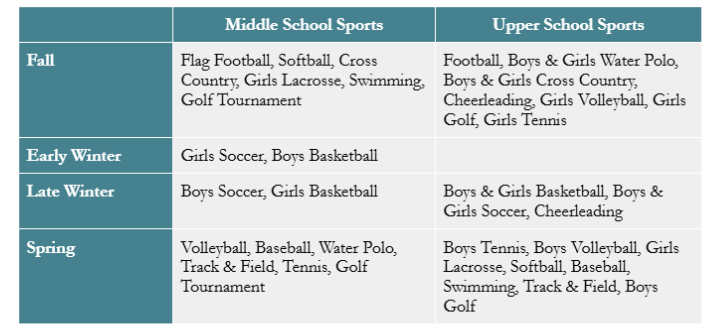 Please note that at the upper school level, some sports, like cheerleading, are provided throughout several seasons. Furthermore, some sports, like lacrosse, are offered during different seasons depending on the school level. Visit the athletics pages for the Lower School, Middle School, or Upper School at Harker to find out more about the opportunities for athletics.
Harker School Arts and Music Programs
Through the Harker curriculum and after-school activities, Lower School students are exposed to the visual and performing arts. With visual arts possibilities like pottery, photography, and video design, as well as performing arts courses and activities such as theater, orchestra, and acting, students in middle school expand on their foundation in the arts. Meanwhile, Upper School students have the option of enrolling in a range of visual arts courses, including architecture, filmmaking, and graphic arts, as well as performing arts courses, including directing, musical theater, and vocal music. To explore more arts and music programs, you can check their website for the programs available for Lower School, Middle School, or Upper School students at Harker.
Clubs and organizations at Harker School
At The Harker School, students have access to a wide variety of clubs and organizations that extend learning beyond the classroom. These extracurricular activities are designed to cultivate leadership, teamwork, creativity, and community involvement, allowing students to explore their passions in meaningful ways.
Enrichment & Afterschool Programs
Harker offers a robust selection of after-school programs and enrichment opportunities that cater to diverse student interests. From STEM-focused activities like robotics and coding to creative arts programs in music, theater, and visual arts, students have numerous opportunities to develop new skills. Additionally, competitive academic teams, such as debate, math clubs, and science research groups, allow students to apply their knowledge in real-world settings. Students in middle school can participate in a range of clubs, including the Improv Club, Creative Writing Club, and Badminton Club. The middle school also offers a speech and debate program, providing students with public speaking and argumentation skills. At the upper school, students can join organizations like the Red Cross Club, Quiz Bowl Club, and Clean Technology Club. Harker also offers extracurricular programs focused on STEM, business and entrepreneurship, and speech and debate, allowing students to build expertise in these fields.
Student Leadership
Leadership development is a core focus at Harker. Students are encouraged to take initiative in school life through student government, peer mentoring programs, and public speaking opportunities. Various leadership groups help students advocate for change, organize events, and mentor younger students, fostering a sense of responsibility and community.
Service Learning
Harker integrates service learning into its educational framework, encouraging students to participate in outreach programs, volunteer projects, and sustainability initiatives. Clubs dedicated to community service and social justice issues allow students to engage with local and global communities, reinforcing values of empathy and civic responsibility. While the specific clubs and organizations at Harker may change based on student interest, the school remains committed to providing a dynamic extracurricular experience that nurtures intellectual curiosity, leadership, and personal growth. For more information about Harker’s Clubs and Organizations, visit their website here.
Who are some famous alumni from The Harker School?
Several notable alumni from the Harker School have made important contributions in a variety of fields:
- • Priscilla Chan. A pediatrician and philanthropist, Chan co-founded the Chan Zuckerberg Initiative with her husband, Mark Zuckerberg.
- • Alexander Wang. An acclaimed fashion designer, Wang is the founder of the Alexander Wang fashion brand and served as the creative director of Balenciaga.
- • Andy Fang. Co-founder and Chief Technology Officer of DoorDash, Fang has been recognized among Forbes’ “30 Under 30” for his achievements in the technology sector.
- • Maverick McNealy. Professional golfer McNealy was ranked number one in the World Amateur Golf Ranking and competed on the PGA Tour.
- • Andrea Nott. Nott, an Olympic synchronized swimmer, represented the United States in the 2008 Beijing Olympics.
- • John B. Owens. Serving as a judge at the United States Court of Appeals for the Ninth Circuit, Owens has had a distinguished legal career.
- • Robert Rothbart. Professional basketball player Rothbart has played for teams in various countries, including Israel and Serbia.
- • Matt Wolf. Documentary filmmaker Wolf is known for directing and producing films such as “Teenage.”
- • Neil Mehta. Founder and managing partner of Greenoaks Capital Management, Mehta has been recognized in Forbes’ “30 Under 30” for his work in venture capital.
Did You Know?
Harker’s Global Education allows students to travel to Japan, Greece, Peru, Costa Rica, France, and other countries worldwide.
Fun Fact!
Which “sweet” fundraiser took place every year in the 1980s? See’s Candies
We were overwhelmed by the rigorous admissions process at Harker, but the expert team guided us every step of the way. Thanks to their support, my son confidently secured his spot at Harker.
— Parent of a 7th Grader
Frequently Asked Questions
-
What are the main entry points for Harker School?
The standard entry points are kindergarten and grades 3, 4, 6, and 9. With the exception of grade 12, they accept applications for all other grades. If a spot opens up, enrollment will be made available to eligible applicants:
- Kindergarten: 60
- Grade 1: attrition only*
- Grade 2: 7
- Grade 3: 22
- Grade 4: 15
- Grade 5: 7
- Grade 6: 40-45
- Grade 7: attrition only*
- Grade 8: attrition only*
- Grade 9: 35-45
- Grade 10: attrition only*
- Grade 11: attrition only*
Harker K–12 has a low attrition rate and a 97% retention rate.
-
What factors are considered in Harker School’s admissions process?
Harker uses a holistic review that considers both academic and non-academic factors. The admissions committee looks for students with intellectual curiosity, strong character, and a genuine interest in contributing to the school community. They also value families who align with the school’s mission.
Decisions are based on the overall applicant pool and grade-level needs, not a single factor. Outcomes include acceptance, placement in the wait pool, or a decision to reapply in a future year.
-
What tests are required for Harker School’s admissions?
- Grades K–2: Candidates will submit a cognitive test from one of their recommended psychologists in Ravenna and arrange a face-to-face classroom visit and readiness evaluation with their teachers.
- Grades 3-4: Teachers at Harker Lower School will administer the ISEE to applicants in person.
- Grade 5: Besides submitting their ISEE (Independent School Entrance Exam) results, applicants will meet with their teachers in person for an activity session.
- Grades 6-11: Testing scores from the ISEE (Independent School Entrance Exam) or SSAT (Secondary School Admission Test) must be submitted by all applicants for grades 6–11. Please visit the ISEE and SSAT websites to register and learn more about each exam.
-
What documents are required for the Harker School application?
Lower school requirements for TK-G5
- Preliminary application and application fee
- Student Activities3
- Parent/guardian interview
- Cognitive assessment (TK-2)
- Teacher recommendation
- Report cards/transcripts (1-5)
- Classroom visit/entrance exam
- Student photo
- Family photo
Middle School requirements for G6-G8
- Preliminary application and application fee
- Student activities and interests
- Activity session (grade 6)
- Parent/guardian interview
- Current English teacher recommendation
- Current math teacher recommendation
- Current principal/counselor recommendation
- Transcripts
- Entrance exam results (ISEE or SSAT), taken after Aug. 1, 2024
- Student photo
- Family photo
Upper School requirements for G9-G11
- Preliminary application and application fee
- Student activities and interests
- Activity session
- Student essay
- Student Interview
- Parent/guardian interview
- Current year English teacher recommendation
- Current year math teacher recommendation
- Principal/counselor recommendation
- Transcripts
- Entrance exam results (ISEE or SSAT), taken after Aug. 1, 2024
- Student photo
- Family photo
Note: In order to apply to Harker, students in grades 10 and 11 are encouraged to fill out an interest form. Because there aren’t many spots available in grades 10 and 11, the admissions office will get in touch with you in the spring to see if there are any openings and ask you to submit an application.
-
What is the Harker School ranking?
The Harker School, located in San Jose, California, is highly regarded for its academic excellence and comprehensive educational programs. According to Niche’s 2025 rankings, Harker holds the following positions:
- National Rankings:
- 7 in Best High Schools for STEM in America – 66 in Best Private K-12 Schools in America – 73 in Best College Prep Private High Schools in America – 130 in Best Private High Schools in America
- State Rankings (California):
- 4 in Best High Schools for STEM
- 11 in Best Private K-12 Schools
- 19 in Best College Prep Private High Schools
- 30 in Best Private High Schools
- National Rankings: