
If you’ve been looking for an academic institution where your child can thrive while becoming immersively independent, here’s a comprehensive guide on how you can start the process.
Explore
Quick Answer for Busy Parents
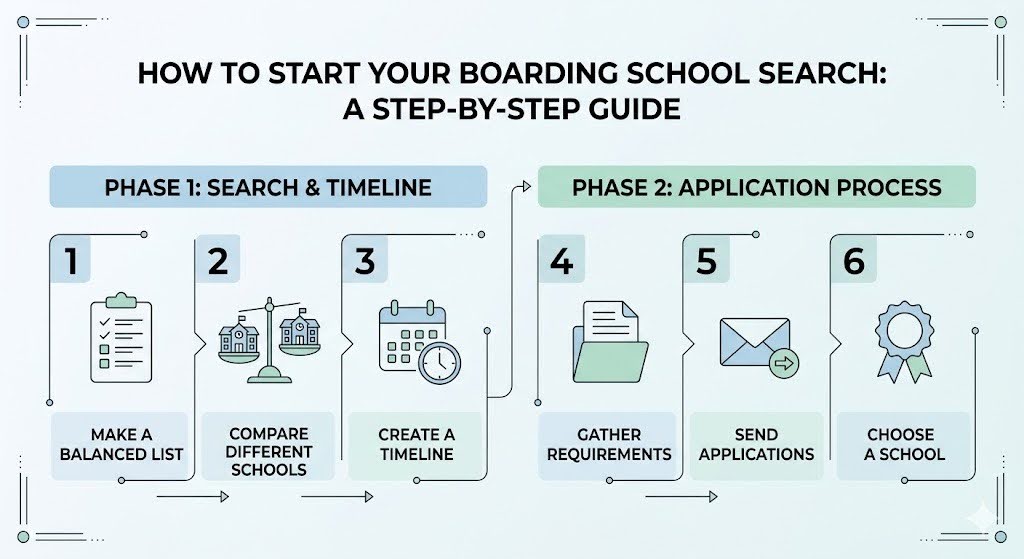
To start your boarding school search, empower your teen to lead the process while you provide strategic guidance. Create a balanced list of reach, match, and safety schools. Once shortlisted, finalize an application timeline: tour campuses, complete interviews, and submit materials early. After receiving offers, evaluate the “fit” before making your final enrollment decision.
The search can be a long and tedious process. But the primary focus is always this—finding the best boarding school that’s also the right fit for your child. The question that is at the forefront of all this is: Does this boarding school align with our family and our child in terms of values, needs, and goals? As you go through each step in this guide, you and your child will gain more understanding and clarity about which school your child feels they can grow the most and feel comfortable living in. Ultimately, the right boarding school for your child is one where they will feel challenged as well as nurtured and supported.
How To Choose A Boarding School For A Teenager
Going through this process with a teenager requires balancing their growing autonomy with strategic parental guidance. They are already at the age of independent thinking, and their need for autonomy is something they want their parents to acknowledge. The best approach is to let them take the lead. Let them initiate the research about schools and show you the list. Explain to your teen the differences between reach schools (ideal schools where your child’s stats are below average), safety schools (good fit schools where your child’s stats match the average), and likely schools (safety schools where your child’s stats are above average).
As a parent, you are your child’s navigator. Offer suggestions, comments, and give insights, but let them make the decisions. Encourage them to ask questions and advocate for themselves.
How Do I Compare Different Boarding Schools Effectively?
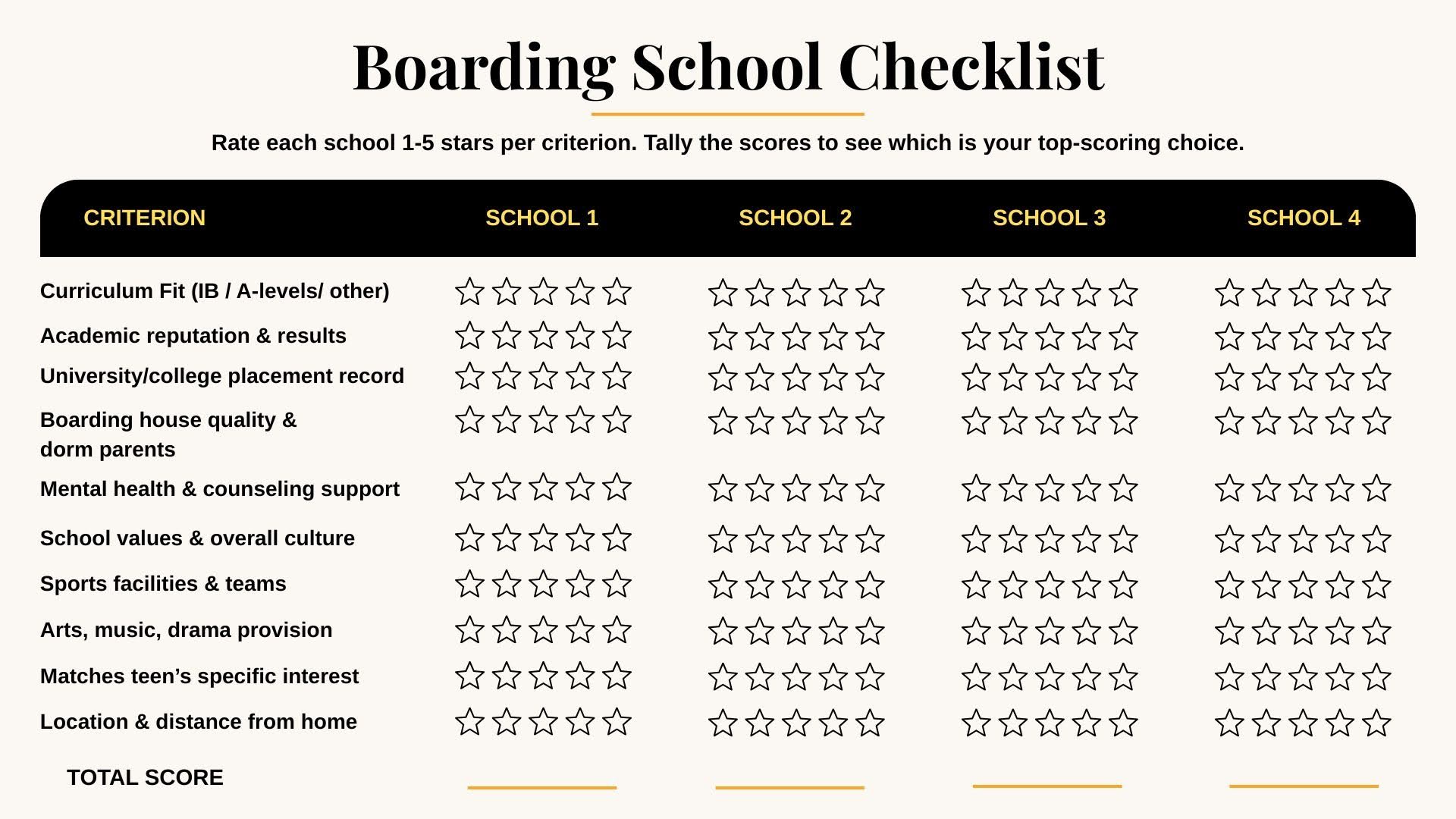
Research and gather as much information as you can while taking into account these factors: Academic Curriculum, Extracurricular Programs, Specialized Programs, Pastoral Care & Wellbeing, Campus Location & Size, Campus Life & Culture, and Campus Facilities. Then compare and contrast your shortlisted schools.
Another effective strategy is to maximize your campus visits and tours. Immerse yourself in the experience. If it’s possible, ask to sit in class, eat at the lunch hall, or attend a school game. Also, try to talk to random students about the school.
We’ve created this Boarding School Checklist to help you narrow down your choices even further. The criteria include academic, pastoral care, campus culture, extracurriculars, and logistics.
What’s My Timeline Between Boarding School Searches And Applications?
| Timeframe | Key Activities | Goals/Notes |
|---|---|---|
| Spring to Summer | Gather info, take diagnostic test for standardized test preps, consult with an educational consultant, book campus tours. | Start research and preparation. |
| Fall | Start application year, check online portals, ask for teacher recommendations. | Begin official application process. |
| Winter | Final submission of essays, transcripts, test scores, teacher recommendations, supplementary materials; complete candidate interviews. | January 15 is the most common application deadline; verify specific school deadlines. |
| Spring | Decision day (March 10), enrollment deadline (April 10). | Schools admit, waitlist, or deny admission; make final enrollment decision. |
Note: While many competitive boarding schools follow this timeline, some institutions operate on rolling admissions or have unique deadlines, so families should always verify individual school websites for specific requirements.
Top Tips In Narrowing Down Your Boarding School List
- Set your non-negotiables first.
- Check official boarding school inspection reports.
- Shortlist by your teen’s special interest.
- Use school fairs and open days strategically.
- Aim for three to five schools to visit.
Best Practices For Your Boarding School Search
- Let your teen lead the search.
- Create a balanced list of boarding schools.
- Go beyond the scripted campus tour.
- Ask for guidance from educational consultants.
- Diversify your options.
Common Questions About Boarding Schools in the U.S.
Q: What is the best age or grade to start boarding school?
A: Most students enter in 9th or 10th grade (ages 14–16), though middle school and post-graduate options exist.
Q: What are the main benefits of a boarding school education?
A: Students gain academic excellence, personal independence, world-class extracurriculars, and a diverse community.
Q: Will my child get enough academic support?
A: Yes, schools provide highly accessible faculty, built-in tutoring, and mandatory, supervised evening study halls.
Q: What do students do on the weekends?
A: Weekends are highly active, packed with organized off-campus trips, campus social events, and athletic competitions.
Related Articles
What are the Best Boarding Schools in the U.S.?
Co-Ed vs. Single-Gender Boarding Schools: Which is the Right Choice for Your Child?
What Most Parents Get Wrong When Choosing a Boarding School
Your Step-by-Step Guide to the Boarding School Application Process
The application process for boarding schools doesn’t differ much from day schools. But as a parent, the stakes are much higher because your child will be away from home. This may add more pressure to an already challenging decision-making process. No need to worry. What’s important is going through each step thoroughly and in a structured way to avoid unnecessary confusion.
What are The Boarding School Admissions Steps?
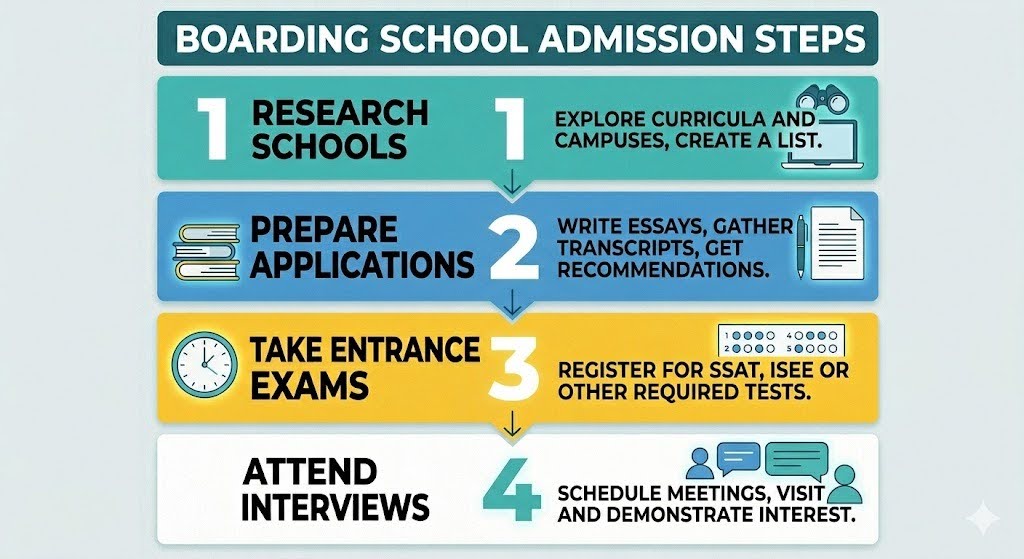
Before your child’s application year, start your school research already. Your child can create an extensive list as much as they want. As you progress through each step, you’ll be narrowing that list down. Get further guidance from an educational consultant. They might suggest that your child take a diagnostic test to prep for Standardized Tests (SSAT/ISEE) and practice drafting essays prior to your application.
Register and check online school portals to see the latest updates on applications and admissions. Request for teachers’ recommendations. Some schools are particular on which subject teachers should give recommendation letters, so it’s best to check the details of the requirements. Start submitting application essays as well.
The standardized test (SSAT/ISEE) and other required tests (depending on the school). If ever there is a need to retake the standardized test, December would be the final window during the application year.
If you had successfully booked a campus visit during spring/summer, it’s most likely that you’ll be able to have your tour in the fall. When your child is having his or her candidate interviews, remind them to prepare talking points and thoughtful questions.
Making Your Final School Selection
Once you’ve done all the steps required, there’s a period of waiting that will happen. Then, on March 10, boarding schools will give out the decisions on whether students are admitted, waitlisted, or denied. If your child gets admitted into a school, congrats! If your child gets admitted to two or more, excellent! Then comes the decision of making the final school selection. Remember that the boarding school that’s right for your child is one that aligns and is the right fit for him or her.
What Happens During Enrollment?
In between March 10 (decision day) and April 10 (enrollment day), there’s what’s called Revisit Days where admitted students are invited to campus to revisit the school before finally making a decision if it’s the right fit before enrolling. This would also be the time to prepare for the necessary requirements for enrollment like health forms, housing, course selection, and summer reading.
Top Tips For Applying To Boarding Schools
- Start 1–2 years early, visit campuses in person, and build a balanced list of reach, match, and safety schools.
- Prep well for entrance exams (ISEE/SSAT), maintain strong grades in core subjects, and challenge yourself with advanced coursework.
- Start essays early, be genuine and personal, get recommendations from teachers who truly know you, and proofread everything.
- Be authentic in interviews, show depth over breadth in extracurriculars, and always meet deadlines early.
- Meet every deadline early. Never submit at the last minute.
Best Practices For Boarding School Interviews
- Research the school deeply. Know its mission, unique programs, and why it’s your specific fit.
- Share your story by identifying three to four core themes about yourself and have specific anecdotes ready to illustrate each one.
- Be specific. Concrete details signal authenticity far more than polished, rehearsed answers.
- Show genuine curiosity. Ask thoughtful questions, reference what you’ve learned, and engage naturally.
- Follow up with a thank-you note within 24 hours that references something specific from the conversation.
Common Questions About Boarding School Admissions
Q: When should we start the process?
A: Most families begin in 8th grade for 9th-grade entry. Applications typically open the fall before enrollment.
Q: What do schools look for?
A: A balance of academics, character, and genuine passion—not just grades. Schools want students who will thrive and contribute to their community.
Q: How important are interviews?
A: Very. At selective schools, a memorable interview can tip a borderline application and is one of the few places a student’s personality comes through directly.
Q: What if we get waitlisted?
A: Send a letter of continued interest promptly and update the school on any new achievements. Waitlists do move, especially in April and May.
Related Articles
When To Start Preparing for U.S. Boarding School Admissions
What The Top Boarding Schools Look For in Today’s Applicants
Step-by-Step Parents’ Guide to the Boarding School Admissions Process
When searching for the right boarding school for your child, it’s essential to go beyond the surface.
What sets boarding schools apart from other premier private schools is that they house the students while they are studying away from home. They teach more than just academics; they instill values, develop character, help build independence, hone responsibility, and cultivate a sense of maturity. At Cardinal Education, our educational consultants understand that your child’s school of choice is vital to their progress in the next several years. We also acknowledge that, as a parent, this distance from them would be challenging to cope with. That’s why we’re here. We want to help you narrow down the best choices, guide your child into this big transition, and take the necessary steps with you to ensure your child finds the perfect fit.
Schedule a confidential consultation with us today.